Thursday, June 20, 2013

These Zombies Are Just Running To A Better Movie

WORLD WAR Z (dir. Marc Forster, 2013)


"World War Z" is one helluva movie. It's too bad that movie takes place just outside the frame of the one we got.

Nearly everything about it feels like it should be the background to a far more interesting movie taking place elsewhere. Explosions drop and zombies suddenly appear. Major cities are leveled. Entire populations are decimated. Brad Pitt's hair gets sensually tousled.  

And yet we never get a sense of this chaos. Never get a sense for how truly epic director Marc Forster feels this story should be. Instead he offers us mere glimpses of the carnage wrought on our planet before hurriedly rushing to the next scene of exposition. 

Intriguing notions such as how North Korea defends itself against the undead are raised, then swept under the rug. A young boy attempts to tag along with Pitt before the movie realizes it doesn't know what to do with him. Israel somehow tapped into the secret of impending zombie doom before the world, but no one seems to care.

"World War Z" plays like a carnival barker pitching us the most Epic Zombie Apocalypse Ever, but when we're shilled our quarter and go around the corner, it's just a few midgets lurching around in make-up.

Such a shame, because the rote elements are assembled for an epic tale of zombie kick-assery. After a perfunctory establishing scene of former UN employee Brad Pitt with his family that establishes, well, he has a family, the movie hits the ground running. Zombies invade Philadelphia without warning and without reason, barely allowing Pitta and his family to escape. Finding his way on a UN vessel, safe in the middle of the ocean from the outbreak, he's informed the only way his family will continue enjoying these comforts is if he trots around the world on a quest for the outbreak's origin. If he can track this mysterious "Patient Zero," there might be hope for a cure.

Romero zombies slowly ambling around, these ain't. Forster's zombies rush you before you even realize, zipping around the screen as if "Yakety Sax" plays in their earbuds. Individual scenes are effective - the initial attack plunks us in the middle of sustained, unwavering terror, as Pitt and his family don't understand what is happening or why, only that if they don't move, they will die. We witness the horror, the confusion, and the sheer panic of seeing every human around you suddenly wiped out.

If only Forster sustained this feeling of large-scale dread. If only he took a step back and recognized the sheer enormity of what's at stake - the world is coming to a friggin' end! Instead, by shoehorning in Pitt's personal quest, Forster and his writers J. Michael Straczynski and Matthew Michael Carnahan awkwardly try to minimize the action while expanding it too. Imagine your local Action News team fighting to share the same studio with CNN.

As strategies go, their's isn't entirely off-base. Granting us an entry point into chaos too large to comprehend can allow personal investment. We witness a clear dramatic arc, and it provides a guiding point within the destruction. It gives us something tangible to care about. Turn to Spielberg's "War Of The Worlds" for a decent textbook on pulling this off. 

Thing is, Spielberg provided a soul beneath the veneer. His characters showed personality, flaws, concerns. You felt like their fate mattered. Forster's characters are either targets or cyphers. They exist either to get mowed down or voice plot devices the screenwriters can't step on screen and say themselves without a SAG card. For all its computer generated zombie hordes and PG-13 blood, "World War Z" is a curiously soulless affair. 

If only the zombies in this movie sought heart instead of brains. They'd be defeated in a day.

Most curious is the third act. Notorious reports of rewrites and reshoots, essentially leaving Forster to scrap the original ending and start from scratch, prepare us for an unholy mess, some blatant piece of studio meddling nonsense. And it is...but not in the ways we expect. The finale of "World War Z" ironically works as the best thing in the movie because it so clearly stands apart from the rest. 

Until then, Forster treats us with a nonstop barrage of stuff. Uninvolving, unmotivated stuff. And if it's not boring, that's only because he grants us no time to be bored. Spoilers withheld, though, the movie makes a hard right turn near the end into an alternate timeline version of "World War Z." It becomes intimate. Involving. A select few characters in tiny rooms, with a clear goal in mind, shot clearly and elegantly, cranking up the suspense.

I'm torn. This demonstrates a complete lack of faith in the filmmaking choices already made - if you're gonna shoot the most epic zombie story ever, at least follow that through to its natural progression. At the same time, the finale kinda works as a mea culpa for all that came before - "We only had seven weeks for reshoots. We know. We're sorry."

So where does that leave us? We have a hollow lead played admittedly well by Pitt, as his only requirement was showing up. We have a plot that plays like some lame Encyclopedia Brown story as he zips around from place to place ("Come see Brad Pitt learn a new fact just in time!"). We have an emotional connection bearing all the weight of a video game on your old dorm room TV. 

One thing could save this movie, and one thing along: For God's sake, shoot it well!. Mindless chaos still holds value if we enjoy it, and to enjoy action, we need some kind of grounding. We need a sense of geography, where characters are in relation to each other. Clear, steady shots to see what's happening.

We're not talking personal style. We're talking the basics. Knowing where to put the camera so the audience's brain and eyes don't give up. Forster's method of directing action feels akin to crop dusting: Cover the whole field and let the rest sort itself out. In one key moment, a character's hand is chopped off, but it's a full ten seconds before we even realize it.

When will filmmakers learn that shaky cam achieves the exact opposite of its goal? Instead of immersing us in the action by making us feel how it feels, it pulls us out because all we feel is dizzy.

Some movies are frustrating simply because they suck. "World War Z" is frustrating precisely because of how much it shouldn't have sucked. After setting out to craft the zombie movie to end all zombie movies, Pitt and Forster found themselves with a zombie movie that thankfully just ends.

PS: Sigh. Let it be known that this movie's 3D takes a giant step backward to the poster children of horrible conversion jobs, "Clash Of The Titans" and "The Last Airbender." We're at the point that 3D conversions are not perfect, but they're virtually indistinguishable from the real thing. "World War Z" evidently didn't get the memo. It's dark, blurry, and ironically, rarely seeming to ever actually use the 3D. Want to pay five extra dollars to make the movie look worse? The choice is yours.

Friday, May 31, 2013

THIS IS THE END Showcases Heart, Along With Other Vital Organs

THIS IS THE END (dir. Rogen/Goldberg, 2013)


Not since the 1963 Hayley Mills classic "Summer Magic" has a movie featuring a horned, horny Satanic beast with a giant wang also exuded such genuine warmth.

Don't get me wrong. "This Is The End" is absolutely scatological.  A severed head finds itself Beckham-ed around the room. Lengthy conversations are had regarding a man's right and demand to deposit semen wherever he pleases. Michael Cera plays a coked-up, sex-crazed version of himself who enjoys the kind of tossed salad you don't top with dressing. That's the delivery method. But it's not the package.

Best known as a team for their "Superbad" and "Pineapple Express" screenplays, writers/directors Seth Rogen and Evan Goldberg specialize in tales of maturity-challenged people facing the truth that relationships they thought they understood might in fact be holding them back. Some of their works are forgettable ("Drillbit Taylor" won't be shown at any Oscar retrospectives). Some are minor comedy treasures. But they've built a voice that is uniquely their own. It stands for something. And one thing you know you'll never find in their pictures is meanness. Characters sometimes operate without a moral compass, but you always get the sense they're aiming for something higher.

In its own way, then, "This Is The End" feels like the movie they've been building to their entire careers - a dividing line between what came before and what's to come. On paper it sounds like a self-indulgent prank they conned the studio into letting them make. With all major actors in the movie playing themselves, Jay Baruchel visits his old "Undeclared" costar Rogen in Los Angeles, hoping for nothing more than a few quiet days of smoking weed and playing video games with his friend, montage-style. Rogen, however, drags him to a party at James Franco's house, a Hollywood scene Baruchel can't buy into. Before Franco can impress upon him any more half-baked theories on why everything is art, however, the apocalypse strikes, and along with Jonah Hill, Craig Robinson, and Danny McBride, they struggle to stay alive.

God, how many ways that "real friends hanging out" concept could fall flat and even feel insulting. A sort of "Grown Ups" for actors who shun the PG-13 rating, forcing us to watch people more successful that ourselves have the good time we're not. Two important things work in Goldberg and Rogen's favor, though. First, the movie is bracingly, gut-bustingly funny. Learning from their mentor Judd Apatow that sometimes it's best to just point the camera at talented people and let it roll, these guys fly on the natural rapport that only they enjoy. Laughs hit like out of an assembly line, fast and fierce.

Second, and more important, "This Is The End" utilizes the shared history we know between these people. Everyone coulda played original characters dropped in the same basic concept, and they could tell the same story. But they wouldn't have the same movie. What ultimately concerns "This Is The End" is a friendship between two people (Rogen and Baruchel) who came up in their field together and now feel themselves drifting apart. They don't want to admit it. To do so would also admit their friendship no longer holds the same value it does in their memories. But at this vital point in their lives, they must take stock of who they are. Who they once were and who they've become. Their shortcomings and outright failures. How maybe the best version of themselves doesn't involve the other person.  

Those same friendships that constrain us, though, can also be our salvation. They connect us to who we once were, they remind us of the person we dreamed of becoming and assumed we'd become, and they can ultimately save us.

On the profundity level, this doesn't exactly approach Ingmar Bergman. Sincerity can sell a movie like little else can, however, and "This Is The End" hits with a shocking resonance.. Maybe this started as a hang-out showcase, but Rogen and Goldberg pursue the opportunity to honestly explore feelings festering inside them. If this movie winds up one of the sweetest of the summer, it's because they meant it.

Look, it's a silly summer comedy. I know. You can enjoy "This Is The End" on whatever level you want. Want to frame it as an inside-baseball showbiz comedy with real actors taking potshots at each other? It's more than happy to comply. Prefer it through the Edgar Wright model of comedies that both send-up and honor their genre? This movie has you covered - although its budget ain't large, you can see the money on screen a few times, and some events in the third act are bug-nuts crazy.

Rogen and Goldberg are clearly firm believes in comedy found in the absurd and the awful, but they also realize there's zero reason you can't throw heart in there too, all side by side, mixing in each other's goo. This movie's such a nimble comedy, tautly paced, zany and full of life. A real gem.

("This Is The End" opens everywhere on June 12th.)

Thursday, May 30, 2013

Welcome To AFTER EARF, Etc, Yawn

AFTER EARTH (dir. Shyamalan, 2013)

 
 At least when most parents force photos of their children upon you, they don't do it through a $130 million flip book.

Ultimately, that's all "After Earth" is: a cynical embodiment of Will Smith's expectations for us to buy tickets and watch his son. To frame it that way even makes me feel cynical. I don't want to bash a father for spending time with his kids and bringing them success. I don't want to bash a 14-year-old boy for being born into a world and following in his dad's (lucrative) footsteps. But them's the cards we're dealt.

Eh. I still feel mean. And believe me, there are so many other ways to bash "After Earth," a movie that would aspire to mediocrity if it weren't so damned lazy. Based on an original idea from Big Poppa Smith himself (possibly while watching an episode of "Survivorman" and remembering, "Hey, I sometimes do sci-fi too, and so forth"), it starts with crushingly bland exposition where Earth is rendered uninhabitable for humans and we fled to a planet outside our solar system. How convenient that we find a place that remove that's also breath-able, but here is a movie that doesn't stop to consider things.

Kitai Raige (Jaden Smith), a teenager with a lack of discipline you best bet will be honed later, dreams of joining the peacekeeping Ranger Corps, led by his father, the stoic Cypher (Big Willie). They're on a mission to Earth. Their ship crashes. Father and son are the sole survivors, with Cypher too injured to walk. Kitai must travel alone to the tail of the ship, 100 kilometers away, to retrieve a MacGuffin that's not important to understand, facing creatures evolved to deadly extremes. All this while Cypher directs him from within the ship.

Overall not a bad premise, right? Clean and solid. Maybe not the stuff classic sci-fi is made from, but certainly better than classic SyFy. The buried lede of "After Earth," though, is this ain't a sweeping summer blockbuster. Instead it delivers a shockingly, oddly intimate work that lives mostly in tight close-ups and scenes set in dirty forests, shunning any sense of sweep. No one passes ruined landmarks. No one ruminates on the Earth that once was. This movie is about a brute quest for survival, a character study with a budget.

That isn't necessarily a criticism. Any movie can be whatever it wants. Like a man strutting down the boardwalk, though, you gotta own it. The premise of "After Earth" (and the movie it seems to occasionally strive to be) demands some genuine sense of wonder, some kind of astonishment or awesomeness, none of which it brings to the table. Is this a survivalist picture set in the future? Is it a big-budget action fest? There's an odd duality at play here, two different, potentially interesting pictures struggling to break out, and both falling flat.

Here's an exercise few blockbuster filmmakers seem to try: Imagine what it would actually be like to live in your movie. Imagine what the world would really look like. Imagine how it would feel. Imagine how your characters would legitimately react to things. "After Earth" supposes a version of our planet where humans can't survive. The air chokes us. The creatures evolved after our departure are vicious. Maybe this is all sumptuous - natural elements returning to dominance. Maybe it's like the city of Baltimore, falling so beautifully. Maybe it's dark and horrific. But dammit, follow through. Besides a monster and a few monkeys made from CGI pulled straight outta "Jumanji," "After Earth" looks disappointingly like the world we know now. As if "The Wizard Of Oz" just took place in the farmhouse next to Dorothy's.

So what director-for-hire crafted this soulless endeavor? What filmmaker grew frustrated shooting late night infomercials and needed a feature to prove to his parents that film school wasn't a waste? M. Night Shyamalan! The guy whose movies studios used to market as, "From the director of 'The Sixth Sense' and "Signs,'" until now, when his name might as well be buried deep within the credits as, "Directed by M. Night Shyamalan...we won't tell if you won't." God knows the man's directed bad movies before, to the point where it's expected of him. There's a curve, however, that demonstrates the correlation of a movie's badness and a movie's enjoyment. "After Earth" completes his journey from the embarrassingly bad down to that slump of the curve, the blandly bad.

What happened to him? He once seemed a possible heir to Hitchcock or Spielberg, neither one a bad place to be. He once conjured suspense and terror and thrills and wonder out of thin air. Even when his name became synonymous with the terrible, at least it was a ballsy kind of terrible. Now he directs with the personal touch of a customer call center halfway around the world.

There's simply no spark to this movie. No life. No moments linger in our minds. It's just stuff on the screen. Even the normally charismatic elder Smith is oddly restrained, delivering most of his performance in a chair alone, as if he purposefully throws the movie to make his son seem less like he reads his lines from cue cards. Clearly the whole thing was conceived to be a self-fulfilling prophecy - young boy venturing into the scary world without his father, a world of beasts and volcanoes and $20 million paychecks.

Lets not be surprised, then, with Will's upcoming press release announcing Jaden as the star of a Sam Kinison biopic. It's not about what's right. It's their post-apocalyptic world. We're just living in it.

Tuesday, April 30, 2013

Hello, Michael Bay's Id Has A Few Things To Show You

PAIN & GAIN  
(dir. Michael Bay, 2013)


Are you a woman? A thin framed dude? A poor person? A generally meek, timid, or downright cowardly individual? Congratulations. Michael Bay thinks you're gross.

Apologies, but it's true. He doesn't want anything to do with you. He thinks you're a waste of time, money, and attention. At this point in his career, it's no secret what draws his fancy. The bigger the better. The louder the better. The hotter the better.

No doubt he'd be a repulsive person to spend an evening with, ordering bottle service and casually sauntering near nubile ladies, expecting on general principle for their panties to liquify, like their contents are made from the T-1000. But we're not asking to hang out with him. We're just asking him to make movies for us. And thankfully, after a decade bound in the PG-13 trenches, he finally lets his horrible person flag fly high with "Pain & Gain."

As a gym manager tired of living amongst the losers, Mark Wahlberg hatches a half baked plan to kidnap and extort a wealthy, dickish client of his (Tony Shalhoub), with the aid of two similarly idiotic, muscular gentlemen (Dwayne Johnson and Anthony Mackie). Expectedly, things do not go entirely according to plan, with Shalhoub tortured and left for dead but still alive, calling on the aid of a private investigator (Ed Harris) to nail these guys while they lavish in his riches. 

Jesus, lets say it: There ain't a trace of morality floundering in this movie. At no point does it slow down to ask, "Is this really OK?" At no point does it wink to the audience as if to indicate this is satire. At no point does Bay ever flatter us to feel we're better than these people either.

"Pain & Gain" is an exceedingly stupid movie about exceedingly stupid people that's also exceedingly entertaining, and while a more self-aware take would no doubt result in a different movie, I'm not sure it would result in a better one. This is a movie about sheer, unadulterated awfulness, the kind that leads mothers to hang their heads in shame, but Bay chooses to frame it as a celebration of that awfulness. Intellectualism holds no home here. Just aggressive roid rage gone amuck, made by and for people who aren't dissuaded by the end of "Scarface" from thinking that Tony Montana lived the dream.

Thing is, though, Bay is good at this. I mean really good at it - our reigning auteur of the bottom rung. I never require a movie to do anything specific. I only ask that it recognizes what it wants to be, then be that thing as good as it can be. "Pain & Gain" practically fetishizes stupidly, but it has the balls to pursue that route to the bitter end, never surrendering its amorality to a "Here's what we learned today" moment. 

Robbed of his usual budget (he shot on a fairly miniscule 26 million), but still with a keen awareness of what makes him hard, Bay feels right at home. He bathes the movie in his typical lush, oversaturated colors, opting to shoot his brawny leading men from low angles whenever possible, until they tower over the camera like the buildings they resemble. Slow motion shots of scantily clad women abound. There's only two explosions, but Dwayne Johnson does do a line of coke off a stripper.

Spry, morbidly comic, and even charming in its juvenile nihilism, "Pain & Gain" most certainly isn't a movie for everyone. Quite possibly it isn't the movie for you. You probably know whether it is or not. When I called the movie "exceedingly stupid" before, I wasn't lying. But maybe I'm not taking the right angle. Bay lives in a world where stupidity is so pervasive it's indistinguishable from anything else. The movie isn't stupid in comparison to the smart. It's stupid like that's the only option. All we can do is either say no or gleefully plunge in.

If you choose the latter, you probably won't feel proud of yourself. But that doesn't mean you should feel guilty either.

Thursday, April 4, 2013

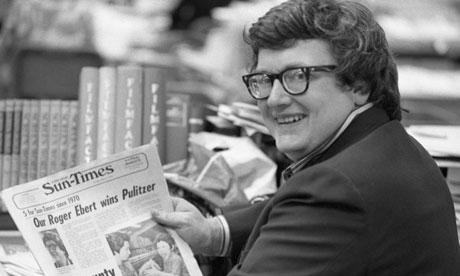
Roger Ebert, teacher


To say I love movies and to say I love Roger Ebert is redundant.

For myself and no doubt hoards of others, it's not that he was the most famous film critic alive. It's not that he was one of the most trustworthy. It's that he was film criticism. Like Richard Pryor was for comedy, Ebert transcended the very boundaries of his field, revitalizing it and recreating it, until his words were a brand unto itself. Reading a Roger Ebert review was like arguing with a close friend who didn't even know you but welcomed you just the same. They glowed with personality, sparked with wit, and often used the movie as a jumping off point to draw you into his own life, sharing an anecdote or political viewpoint or a philosophy. What's more, he did it without snobbery or elitism, recognizing that movies can be great as entertainment or as art. His pans were legendary (check out the scorched earth treatments of North and Deuce Bigalow: European Gigolo). His praises were inspiring. Often times when I rewatch a great movie, it's because I want to see what Ebert saw.

Film criticism by nature is opinion writing. You watch something, then say what you think about it. What Ebert brought to the table, though, was his steadfast personal voice, a voice that never betrayed him long after cancer did and that will live on long after him. His reviews were uniquely, unmistakably his own. It's a style I shamelessly crib in my own reviews, hoping against hope to find one of my own. Critics sometimes try to hide behind the curtain, fruitlessly hoping to keep the movie the main focus, forgetting it's their views about the movie that really guide the article. Ebert never feared employing the dreaded "I" while never seeming vain about it. Intelligence seeped through his takes on even the fluffiest of movies, but not the intelligence of someone who knows he's smarter than you. Instead it was the intelligence of someone who assumed you're as smart as he was, who saw you as a peer, who was excited about the movies and wanted you to be excited about them too.

It's no hyperbole to say that film criticism, and how many Americans think about the movies, stands as Before Ebert and After Ebert.

That's why Roger Ebert was a great critic. But it's not why he meant so much to me and why his death feels so personally crushing. For that, lets go back to when I was 11 years old. My family and I just moved a few miles down the street into a new house we built next to my grandparents. Those first few days there, waiting for the new furniture to arrive, made us look like squatters to an outside eye. Empty rooms, no decorations, no furniture. No television yet either, which was a sin outweighed by few others. Sitting alone in the living room, against an orange husband pillow which I still have on my bed, I perused my parents' box of books for something to fill time, eventually landing on Roger Ebert's Video Companion. I read about new movies I heard of. I read about old movies I hadn't heard of. I read a piece about "Citizen Kane," which he said he hopes plays in heaven.

"Your emotions will never lie to you," as Ebert said. It doesn't matter how old you are. And even if his words and intellect far exceeded my own limited capacity, the passion did not. It stuck with me, and all I wanted to do was follow where he led. For years on, my mother bought me subsequent Video Companions, which I voraciously consumed before the age of Internet archives until the books' spines needed to be duct taped together. Discovering movies is not linear. There's no single tree trunk. There are branches which then branch off from each other. If you found Ebert's Great Movies piece on "Taxi Driver," that inspired you to see other Martin Scorsese movies. Then you watch movies from his contemporaries, like Francis Ford Coppola or Robert Altman. Then you find movies and directors that inspired those guys. Then you find contemporary works of the inspirations. So on and so forth. It never stopped growing and gushing, making all those visits to Blockbuster video with my mother during Friday night shopping count.

Such discoveries took me in thrilling new directions. They excited me. They were like my secret no one else held. But Roger Ebert's reviews remained the guide. He was my beacon. His light shined to a world vaster and greater than my town of 2,000 people and a handful of stoplights. He pointed me to Scorsese, to Herzog, to Altman, to Keaton, to Ozu. He pointed me as an awkward young boy with a few friends to these artworks that I could call my own, taking me to college, then now, then whatever comes next. Always guided by his insight into this world of laughter, fear, dreams, and sadness, where we can cry with joy, then with sorrow, then just because all these emotions are there.

I lost track in that last paragraph whether I'm still talking about movies or the actual world, but maybe that's the point.

And now it's all gone. No more Roger Ebert, but even worse, to paraphrase Billy Wilder speaking of Ernst Lubitsch's death, no more Roger Ebert reviews. I'll never wake up on Fridays to read Ebert's take on the new movies I cared about and the new movies I didn't, and that feels wrong. Not just sad. Not just upsetting. But fundamentally wrong. The way I experience movies is forever altered. No more of his opinions. No more incisive cutdowns of the bad movies, birthing from a place more of warm disappointment than anger. No more praise of the great ones that made them seem magical. I'm stuck figuring out what I think about a movie for myself from now on. We'll see if that flies.

I didn't know Roger Ebert. I never met him, although he did respond to an email I sent as a teenager, signing off, "Best, RE" and prompting a high of, "Holy shit, Roger Ebert talked to me!" for days. But save for my own parents and maybe one or two other people, no one else is more directly responsible for who I am today. As we stand together trapped in the undertow, doing our modest versions of God's work, work that started before us and continues after us, movies are the great collective documents of whoever we are. They reflect us. As Ebert wrote in the introduction to his book The Great Movies, "We live in a box of space and time. Movies are the windows in its walls. They allow us to enter each other's minds -- not simply in the sense of identifying with the characters, although that is an important part of it, but by seeing the world as another person sees it ... Of all the arts, movies are the most powerful aid to empathy, and good ones make us into better people." 

That's something I truly believe, and if all these movies helped shape how I think and how I act and flat-out the kind of human I am, that's only because he helped me understand them in the first place. All that probably sounds like lofty praise for a film critic. But that's because Roger Ebert was a hell of a lot more than a film critic.

Thank you, sir, for everything.

Sunday, March 31, 2013

If you combine your hotel and murder on Expedia, you get a rate

SPRING BREAKERS                                                                                       
(dir. Harmony Korine, 2013)


What a seemingly effective act of cinematic perversion "Spring Breakers" is. Taken in any five minute increments (of which this randomly-cutting movie could likely be reassembled without problem), and it's a hypnotic day-glo concoction of scantily-clad coeds, titillating sudden violence, and the most bizarre James Franco performance this side of most other things James Franco does.

Problematically the movie is feature length and keeps going, as we quickly learn we're not partying with "Spring Breakers" - it only roofied us. And once the effect wears off and we see the clear light of day, "Spring Breakers" becomes reduced to what it really is: a movie playing in the shallow end of the swimming pool trying to fool us by changing the depth signs.

For its first third, "Spring Breakers" approaches plot like it's the photo album rather than the photos itself, just a hollow vessel to hold whatever it desires. In this case, it concerns four college females, always scantily clad, allowing the movie's costume designer an easy day off. Desperate for the cliched spring excursion to Florida but with only $325 between them, they hatch a scheme to rob a local chicken shack with water pistols. What follows in St. Petersburg is initially your typical romp of drinking and promiscuous sex, bare breasts abounding, all amped up way even beyond 11.

All this until Alien (real name Allan) enters the picture. Played by James Franco with the zeal of an untethered actor working in his own movie, he's a local rapper/gangster whose career seems to lean heavily toward the latter. Soon he draws the girls into his portal and they ditch the 750ml bottles of liquor for semi-automatics, going on shooting sprees well beyond the usual collegiate mischief.

Writer/director Harmony Korine's gambit is some kind of audacious brilliance because those who love the movie and those who hate it will point to the exact same evidence. There's little room for debate. Little room for two valid interpretations. 

"Spring Breakers'" pitch for itself boils down to Jason Lee's definition of rock and roll in "Almost Famous" - "Here I am, and fuck you if you don't understand me."

We can all agree Korine shoots the movie like a montage of itself, rapidly cutting from scene to scene and within a scene itself, doublebacking to revisit moments from only slightly different angles while purposefully avoiding any elegance. Lines in the voiceover find themselves repeated with no clear motive. Footage of spring break debauchery is presented like a parody of an MTV parody, with extreme close-up and pulsating bass lines and oversaturated colors allowing the titties and booze to wash over us.

What gets tricky is when you're forced to decide whether this has merit or not. Korine's proponents will call the movie a twisted reappropriation of Frankie Avalon/Annette Funicello beach movies about the fun you can have when your parents aren't around. They'll say he doesn't set out to craft traditional narratives, but instead wants to break down the language of film and rebuild it to surreal, avant garde purposes. Meanwhile his detractors will say he's an emperor with no clothes and that he made a thesis instead of a movie - a movie that's all style and no substance, until the style becomes the substance, until that style quickly turns abrasive.

None of this to sound condescending. Instead to say that Korine and his movie inspires two distinct viewpoints that are equally valid because they can't be pitted against each other. No matter what side you're on, the other side simply didn't get it.

"Spring Breakers" isn't without its own genuine merits either. A sequence where Franco quietly seduces one of the more wholesome, frightened coeds to stick around, all with his hand caressing her face until it seems to envelop her, is chilling in its latent dread. Franco also delivers a monologue about the stuff in his home, built around the phrase, "Look at my sheeeeit," that deserves to be memorized by aspiring actors for auditions.

And there's a certain level of honor in an artist who works completely on his own terms, crafting a movie whose obnoxious style feels designed for you to hate it, taunting you to do so, until the rug is pulled out and it's time to get on board. If this is what Korine wants to do, "Spring Breakers" at least feels like purest distillation of these goals.

Ultimately it just feels like a surface-level movie that doesn't deserve a look beneath the surface.

Saturday, March 30, 2013

Or as they retitled it in North Korea, OLYMPUS HAPPY ALL THE TIME

OLYMPUS HAS FALLEN 
(dir. Antoine Fuqua, 2013)


What a pitch meeting that must have been for "Olympus Has Fallen," no doubt full of wit, passion, and intellectual volleyball...

Director: "So we have this idea for a movie..."

Studio executive: "Stop right there, where do I sign!?"

It helps to know this is actually the executive's 7 year old son sitting in the office of his father, who's caught in a meeting. But details aren't important.

And there might as well be the motto of "Olympus Has Fallen": Details aren't important. For here is a movie that seems to have been assembled from yard sales of better movies. Explosions? Check. Troubled hero seeking redemption? Check. Shots of men leaning over tables, mouth agape, as they watch startling footage on televisions? Check. Actual friggin countdown clock for some kind of bomb? Double check.

"Olympus Has Fallen" isn't a challenging movie. It isn't a profound movie. It isn't a groundbreaking movie. But it is, by all technical definition, a "movie." As such, the most elemental question one must ask when the lights come back up is, "Am I unhappy with how I spent these two hours?"

Although the answer might only be about 75% , that's high enough for a passing grade if we're using college scales. Director Antoine Fuqua and crew seem to interpret the word "stupid" as a personal challenge, but so cheerfully and so gleefully! I can't remember the last time I saw something so thoroughly wrong-headed while at the same time caring so little. The whole thing is such a delirious assault of stuff that if you concede defeat and go along for the ride, it works, in an admirably goofy way.

With the ulterior motive of supplying future film classes with a scavenger hunt for cliches, "Olympus Has Fallen" concerns Mike Banning (Gerard Butler, perpetually posing for the movie poster), former Secret Service agent who regrettably allowed the First Lady to perish in a car accident while trying to save the president (Aaron Eckhart). Now he works a desk job in the treasury department, but when North Korean baddies invade the White House and hold the president hostage, only one man can save them all! One man that North Korea didn't count on! It's only exclamation points from here on out!

For a movie that devotes its entire first reel developing that tragic back story for Butler, Fuqua and screenwriters Creighton Rothenberger and Katrin Benedikt don't seem to give one cheery damn about it once the mayhem kicks in. Tacked on in a half-assed attempt to give the story emotional heft, it's not only steamrolled over for the sake of action, it's entirely forgotten.

This isn't meant to criticize. Just to point out that the movie has one overarching, adamant goal: watch people kill each other real good. Sure, one could criticize the confusing goal of North Korea to launch some secret American missile system that plays like a nuclear MacGuffin. Or the laughably expository dialogue where characters repeat each other's names and job titles and dramatic purposes in case we forgot. Or the inconsistent ease with which Butler evades the bad guys, then runs into them again when the movie decides it's time for a fight scene.

Want to tackle the movie from that angle? I can't in good conscience argue. Keep fighting the good fight. But we're dealing with a movie whose bottom line is the body count, and sweet Lord, what a body count it has! Characters knifed in the head. Helicopters crashing over the West Wing. Fields of faceless citizens mowed right down with machine gun turrets. 

If the guys at Pixar animated a snuff film in their spare time, this movie no doubt puts their CG blood level to shame. 

"Olympus Has Fallen" coulda used more zest in its screenplay, more spark in its stupidity (although using a Lincoln bust to crush someone's skull was a nice touch). And it uncomfortably straddles the middle ground at times, not sure whether to embrace Roland Emmerich disaster iconography or "so bad it's good" midnight movie cheese.

This is still the stuff from which goofy smiles are born. Watch it in a packed house where sarcastic comments flung at the screen are encouraged. Watch it when it debuts on Starz in three months. Or don't watch it at all. Whatever. "Olympus Has Fallen" has no reason to exist, but I don't deride its existence.

All it lacks is a post-credits shot of a lone White House janitor shoving all the corpses in a pile with a push broom.