Thursday, January 31, 2013

A Mediocre HANSEL AND GRETEL Projects Film For A While, Then Stops

HANSEL AND GRETEL: WITCH HUNTERS
(dir. Tommy Wirkola, 2012)


Here is one missed opportunity that wouldn't have amounted to much anyway. A wannabe cheeky concoction of fairy tale lore and bloody 3D gore, "Hansel And Gretel: Witch Hunters" doesn't so much run from beginning to end as it does stumble aimlessly until director Tommy Wirkola puts it out of its misery.

Some movies exist to enlighten. Others exist to entertain. "Hansel And Gretel" seems to exist largely to distract you from the fact that other movies exist. Honestly, I care so little about it, I'm not bothering to write the ampersand that officially takes the place of "and" in the title. Eh, it's difficult to find on the numbers row, and "30 Rock" starts in an hour.

Stupid but fun, I can accept. Abject horribleness I can even get on board with. "Hansel And Gretel" instead plops in that dreaded trench of mediocrity. Nothing redeems it. Nothing stands out. The plot is telegraphed miles ahead of schedule, so as it hits key points, beat by beat, you can feel the grinding of its gears.

Such a shame, because as an exercise in genre mash-up, the movie coulda been harmless fun. Jeremy Renner continues his apparent Leap Year pledge to say yes to anything by showing up as Hansel to Gemma Arterton's Gretel, who encountered a witch as kids and were cursed to be the only characters in their movie without German accents. Despite this crippling setback, they grow up with a drive to slay witches and luckily they find a bunch to kill, otherwise we'd just be stuck watching our graves fly 88 minutes closer to us, all in 3D!

What's frustrating is I know exactly what they're going for. Not a classic, mind you. The results would always be hollow. What they're going for, and what the movie distressingly lacks, is "fun." This was supposed to be fun. Gore flying at the screen, characters cracking wise amidst serious settings, snarky anachronisms - all the ingredients are here.

The problem is that no one involved seems to want to be there. There's no devilish glee in the actors or the director or the script. No sense of getting away with something. A casual viewer might suspect we're watching the result of a cheesy sitcom pilot, where a film crew gets into a car accident, and because they have no insurance, the judge forces them to make an R-rated splatter flick.

Wirkola shoots in a flat, static style - his camera not so much involved in the action as documenting it. Everything sorta occurs in front of the lens that just happens to be there. And his script with Dante Harper offers no zing, no wit. Instead of the impudent romp they evidently wanted, lines just lie on the page, like a dead slug. Also telling to Wirkola's lack of commitment to character: important-seeming traits are raised and discarded at will, as subplots are similarly cast aside when he becomes bored with them.

All appropriate, though, for a movie that amounts to nothing.

Neither tightly propulsive nor gloriously over the top, "Hansel And Gretel" now joins the pantheon of movies that technically qualify as movies. May it wear its paper crown well.

Monday, December 31, 2012

10 Great Movies At 90 Minutes Or Less

Brevity is the soul of wit. And apparently 2012 films offer the least witty crops of work this side of "Mein Kampf." Some of these titles earn their extra reels - the six parallel stories of "Cloud Atlas" demand time to breath. Others feel like glorified DVD collections of deleted scenes (sorry, Peter Jackson and "The Hobbit: Midgets Cross A Bridge"). 

Still, between those, and "Lincoln" (150 minutes), "Skyfall" (143 minutes), "Les Misérables" (158 minutes), "Zero Dark Thirty" (160 minutes) and "Django Unchained" (movie still running), filmmakers seemed to argue that if less is more, think about how much more more would be. Presented are 10 movies, in alphabetical order, that find greatness while still maxing out at one REM cycle. Take note, Hollywood. All of your ideas for a movie aren't worthy simply because they exist.

BEFORE SUNSET (80 minutes)
This movie flows. It glides. And it all seems effortless. Presented entirely in real time, director Richard Linklater and his cast of two deliver remarkably fluid dialogue that begins with pleasantries and gradually, believably breaks down to the characters' realizations that little in their lives went according to plan. Between this movie and "Before Sunrise," Linklater displays a keen eye for those brief, random moments that forever change your life.

BICYCLE THIEVES (89 minutes)
 
Italian neorealism takes cinema that was crushed into rubble and builds it anew with what's left. A man has a wife and son who would look sad even with a smile. His job requires one thing - a bicycle. His bicycle is stolen. He tries and fails to recover it. This film, probably the neorealism's crowning achievement, breaks your heart over and over again so many times, thank god it's not an epic. Its deep, unimpeachable sadness cuts to your core.

DETOUR (68 minutes)
You want real film noir? The seedy, lurid soul of a genre about characters whose souls just sucked, plain and simple? Here it is - everything about noir you want, and nothing else. Shot on the cheap, the movie lacks everything a conventional film class would tell you a movie "needs." But that grimy lack of production values plays up the film's wasted heart, and it has attitude to spare. Most movies on this list are short by choice. This is probably the only one that is short simply because they couldn't afford more film.

DUMBO (64 minutes) 
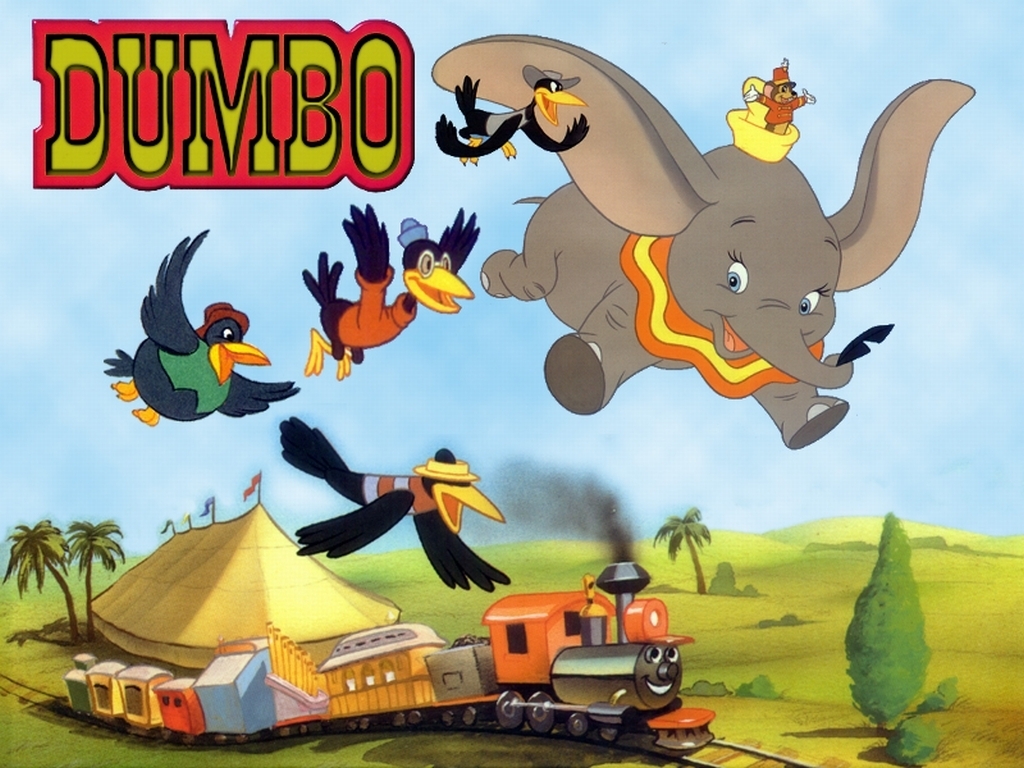
A bit of a cheat, sure. Early animation's painstaking production process required the movies to be short by design, lest the staff garner intense carpal tunnel. Still, good storytelling is good storytelling. My favorite of Disney's WWII era features, "Dumbo" zips from beginning to end, zipping in a zippy way. There's simply no time to be bored. Plus, my mother still cries at the "Baby Mine" sequence. For whatever that's worth.

THE GENERAL (75 minutes)
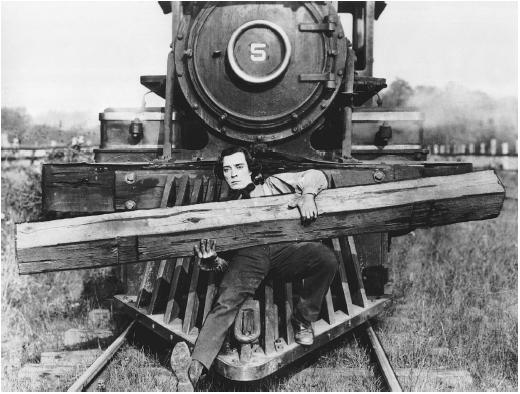
About 75% of what I think is funny, I'd wager, comes from Buster Keaton. Funny isn't people trying to be silly. It's people trying to be serious and failing. "The General" finds Keaton at the peak of his powers, a man desperately clinging to his dignity as everything crashes down around him - if Chaplin was the Spielberg of his day, Keaton was the Wes Anderson, offering straight faced characters unaware of the insanity in the background.

KILLER OF SHEEP (83 minutes)
How did this movie go undiscovered for so long? And what a crime that is. A kind of weird fusion of Altman, Kubrick, De Sica, and Cassavetes, Charles Burnett's short little masterpiece is like as science experiment gone horribly right. Shot in 1979, it set on the shelf for almost 30 years, but now it's finally getting its due. With no discernible story, arcs, or meaning, Burnett's vignettes of working class life in Los Angeles' Watts district just teems with life itself.

PATHS OF GLORY (88 minutes)
Kubrick had a heart. He just by and large didn't feel like using it. One of the few exceptions, though, being this 1957 anti-war tale of a French WWI officer who refused to carry out a suicide mission and defended his men against accusations of cowardice in court. Kubrick's classic "2001" and "Dr. Strangelove" both depict machinery acting exactly as designed and bringing on chaos. Similar to a theme explored in this earlier work, except the machinery is war. Such a moving story, told is such economy. 

PICKPOCKET (76 minutes)
Christ, if only every movie told their stories with such laser precision as this one. To bust out an old trope, this movie works like a samurai - enters the room, does its job, and leaves not a moment too soon. Every shot matters. Every cut matters. Director Robert Bresson reportedly shot takes over and over again until all soul drained from his actors' faces, wanting a movie that offers no emotional cues. Here is a movie that isn't short as much as it's exactly as long as it has to be.

RASHOMON (88 minutes)
If "Rashomon" didn't exist, it would be necessary to invent it. The movie speaks to such a fundamental aspect of human nature, that the "Rashomon Effect" entered the public lexicon simply because there was no better way to describe it. No great secret to say that people lie. Kurosawa takes it a step farther, though, and suggests these lies really aren't lies when the tellers all believe it. Basically, factual events are subjective and nothing is knowable. Such an idea has no answers, and thus no need for the movie to drag. There it is.

STAND BY ME (88 minutes)  
Stephen King crowns this the best adaptation of his work, and although time will tell on "Dreamcatcher," I get where he's coming from. A coming of age story of four boys blissfully unaware of the cold hard punch of life waiting for them around the corner, this movie is so light and gee-whiz charming without being cloying about it, you forget its about people trying to see a dead body. What a little treasure of the movies. Make more stuff like this, Rob Reiner! We miss you.

That's it for 2012! Happy New Year from Filmvielle! May your 2013 be brief and to the point.

Wednesday, December 19, 2012

Read This DJANGO UNCHAINED Review With An Ironically Perfect Song

DJANGO UNCHAINED (dir. Tarantino, 2012)
 "Django Unchained" is like writing history with lightning, and my only regret is that it is all so terribly untrue.

Here is a movie you wanted, whether you knew you wanted it or not. A work of glorious mayhem, Quentin Tarantino's latest blends spaghetti westerns, blaxploitation, a downright-odd-at-times slapstick, and a stinging indictment of American history, with a delirious amount of blood serving as the glue. Call it "Blazing Saddles" meets "Shaft," The Man With No Name meets Sweet Sweetback, or whatever you want. There's nothing else on the block like it.

Self-dubbed Tarantino's "southern," the movie drops us in 1858 (two years before the Civil War, a helpful title card informs) as bounty hunter Dr. King Schultz (Christoph Waltz) absconds with the title slave (Jamie Foxx). In exchange for his help tracking down Schultz's current targets, he promises Django his freedom and the chance to rescue his wife from the satanic plantation owner Calvin Candie (Leonardo DiCaprio, positively relishing his role).

Following 2009's "Inglourious Basterds," "Django" finds Tarantino continuing a new, unexpected phase of his career - historical period pieces as wish fulfillment. It doesn't matter that Hitler never died in a torched movie house or a runaway slave could never shoot his way through plantations with such reckless abandon. Tarantino's characters are unaware they're trapped in the confines of history. Instead, merely trapped in their creator's own imagination.

Accuracy is beside the point. What matters is Tarantino's revisions make emotional sense. He creates characters and follows them to their logical end, wrapped up in a way that is also satisfying to 21st century audiences in the theater. 

One could make the argument that his career since "Jackie Brown" (to date his most human work) represents an increasingly indulgent exercise in genre. That characters don't matter. That plot doesn't matter. That an emotional core doesn't matter. That instead, his movies stand as an alter to himself and all the film geek knowledge he can thrust upon the world.

So easy an argument, that I almost believe it as I write it. But it's too easy. His movies aren't patchworks of those that came before. And they aren't dead museum pieces. They're breathing works that are hyper-aware of their own existence as movies and using genres we love, allow those genres' very conventions to be the heroes.

A hard pill to swallow, I know, that a slave like Django could waltz onto a plantation with a gun and fire into the chest of a man who whipped him, offering the perfect capper of, "I like the way you die, boy." Only in the movies is this possible. Unlike "Jackie Brown," where the emotional core comes from the characters themselves, "Django" ultimately satisfies as a testament to movies themselves as the great uniting art form.

It's movies as fantasy, yes. But it also speaks to film iconography as a shared emotional language among fans. And when it hits on a gut emotional level, as Tarantino films don't always do, it's because he's employing the bastard art of cinema (visuals, performers, musical cues, edits) to make it happen.

Plus it doesn't hurt that "Django" ain't no film student thesis. Tarantino reaffirms his status as one of cinema's most merry pranksters, throwing everything he loves into a blender and frappe-ing it into a new singular work. Above all else, the movie is wicked fun, Tarantino slashing American history with unbridled zeal. 

His trademark weaknesses remain, to be sure. The movie is too long by a fair shake - you could cut 30 minutes from roughly any random chunks in the movie and not sacrifice much. Although no individual moments are downright "bad," he does indulge his seeming belief that every idea he has must be committed to screen. Some scenes (such as a dinner table conversation between Django, Schultz, and Calvin) aren't performed as much as they're staged, as Tarantino invites us to hang out in them.

Pacing can be your friend, QT.

Look. You know Tarantino by now. I know him by now. If it's your thing, this will be your thing too. If it's not your thing, it won't be your thing. Just don't call him a pastiche artist. He might take the familiar, but he reintroduces it as something aggressively original. When he makes a new movie, I look forward to it. I want to see it. I want to talk about it.

"Django Unchained" allows for a few new Tarantino tricks (luscious western cinematography, violence that stings instead of just titillating, and some of the most overt comedy of his career). But it's ultimately a logical step in the path his career's taking. What a vital filmmaker, and what a vital film. I'm so glad it's a thing mainstream audiences will see. Whether or not they realize what they're in for.

Thursday, November 15, 2012

LINCOLN Is A Riveting Portrayal Of Men Talking In Rooms

LINCOLN (dir. Spielberg, 2012)
 Above all else, Steven Spielberg's "Lincoln" puts your No Shave November to shame, assembling the fiercest collection of beards this side of the Mississippi.

In another more "meaningful" way, the movie also boils the president down to the most human level yet seen. Gone is the iconography. Gone are the famed tales of doing his math homework in charcoal and writing the Gettysburg Address on a napkin with the blood squeezed from a dragon or whatever. Gone is the history viewed in hindsight.

What we're left with is a strikingly, at times frustratingly, intimate portrayal of a man who has long since belonged to the ages. If its main lesson is the simple one that Lincoln lived his life as a human being - plain spoken, personable, with moments of doubt - maybe that's a lesson worth remembering. History isn't made by faces on the coins we use to scrape gum off our shoes. It's made by actual people who show up.

As I watched "Lincoln," I felt an acute awe that here's a man who actually lived and interacted with other humans. A near-childlike observation, I know. But also a vital one.

Spielberg's boldest gambit, one that ironically proves to be his greatest asset while also holding the movie back from greatness, is his razor focus. Forgoing the usual "greatest hits" biopic style ("Here's the Lincoln/Douglas debates, here's the death of his son, here's the..."), the bulk of "Lincoln" dwells in the last few months of his life as he pushed to pass the 13th Amendment. It's the style favored by Philip Seymour Hoffman's "Capote." Pick one key event from the subject's life and dive headfirst into it, blowing up each detail to life size and hoping it paints a larger, more symbolic picture of the man.

Oddly this also creates a schizophrenic struggle that the movie never quite overcomes. It wants to be a historical epic while remaining a small-scale character study. It wants to be a "how the sausage is made" political drama, but with that usual dash of Spielberg populism. If we get no closer to what made Lincoln tick, maybe that wasn't on Spielberg's agenda. It still leaves an emotional distance between us and a man clearly intended to be a character in his own drama.

Spielberg can't for the life of him shoot a movie that doesn't look at home on the big screen. With cinematographer Janusz Kaminski, he bathes interiors in lush light and shadow and supplies a more cinematic vista than his story seems to even request. Still, "Lincoln" has comfortably rested on Spielberg's to-do list for the better part of a decade and damned if the resulting movie makes evident why.

God, though. To be in the same room as Lincoln. To watch him react. To watch him spout anecdotes and tell jokes. To watch him struggle when men stand in his way. Daniel Day Lewis' greatest gift as an actor is his ability to be perpetually in the present. We never catch him planning his next movie or behaving out of artifice. It's a downright eerie transformation, completely devoid of vanity, and just a towering achievement.

In fact, Spielberg himself displays an admirable lack of vanity, stepping back more than I can remember to let those around him shine. This is a performer's picture, at times becoming a game of Spot That Character Actor (knowing the guy who appeared in both "Breaking Bad" and "The Wire" earns you bonus obsessor points). James Spader in particular delights by popping in and seeming to forget he's in a costume drama.

Everything I can ultimately say about "Lincoln" is that which will drive certain crowds away while sending others a-flocking. Don't expect sweep. Don't expect bombast. Don't even expect goosebumps. Instead, expect a meticulous study in how one particular piece of history is made by the people who showed up to make it. Characters sure do talk for multiple turns of the script's pages - screenwriter Tony Kushner never met a monologue he couldn't expand, and Spielberg never met a monologue he couldn't slowly zoom in on while the John Williams score swells.

Still, as I write this, President Obama recently earned his second term. He stands center in a nation that sees him either as a pillar of nobility and good intentions, or an agent of our demise. No one yet knows how this period of history will play out. And it's vaguely comforting to see on screen one of our greatest presidents when he was alive and knew just as little, but trying his best to figure things out as they came. If "Lincoln" doesn't draw direct parallels between those times and ours, it shouldn't have to. History just repeats itself with different clothes.

It's a dry but absorbing work, seemingly destined to bore unsuspecting middle schoolers to tears when their teacher doesn't have a lesson planned. Whatever. Kids don't deserve Daniel Day Lewis. But this story does deserve a bigger stage.

Thursday, November 8, 2012

This SKYFALL Review Brought To You By Heineken And Joy

SKYFALL (Sam Mendes, 2012)
Any great movie contains "that" moment. The shot or line of dialogue or look from the actor when you decide you love this movie, when you submit to its power and strap yourself in, all while tactfully ignoring that nagging fear that it will drop the ball.

In "Skyfall," that moment hits in the opening scene and never lets up. Bond (a never more assured Daniel Craig) stumbles onto a mission in Turkey gone horribly wrong, sparking a bravura chase sequence combining cars, motorcycles, trains, forklifts, disbelief, and anything else that happened to be near set that day. To say it challenges credulity is to miss the point (aren't all Bond movies supposed to open with a little swagger?).

What matters is it throws down the gauntlet for a movie that didn't come all this way, through all of MGM's famed financial woes, to be timid. Not only is it a superb James Bond movie and the best thriller of the year, but it's a great movie, period. Here is one bustling, invigorating entertainment representing what pop filmmaking can and should be. A breakneck series of "This is too good to be real, oh wait it is, will it ever stop, IT NEVER STOPS!"

Hyperbole, take a holiday.

Carrying 50 years of creaky franchise history on its shoulders, "Skyfall" and newcomer director Sam Mendes bridge the gap between the old and the new, the elegant and the gritty, the Connery and the Craig (stranding poor Timothy Dalton somewhere in the moat). After that disastrous Turkey mission that supposedly left Bond dead, MI6 headquarters in London finds itself the target of a terrorist bombing. Lured out of hiding but not much giving a damn for the company that abandoned him, Bond sets loose after the man responsible (a terrifyingly flamboyant Javier Bardem), whose motives reveal to be intensely personal.

Mendes and his screenwriting team present themselves as clear scholars of the Bond franchise, paying respects to the familiar tropes when necessary. This ain't no Mad Lib movie, though, filling in the blanks in a preordained structure. "Skyfall" sets to point the compass in a new direction, and it zigs just when you expect it to zag. Bardem holds court in the usual island lair, but he views it as a disposable novelty. The "Bond Girl" is all but an afterthought - disposable candy to cut a few scenes of the trailer around. And instead of an action climax with the fate of the world crashing down, Mendes opts for a lyrical ballet of images (although rest assured, gunfire and explosions abound).

What "Skyfall" ultimately delivers is a 2.5 hour movie with a razor focus. Bond isn't the scenery in some other man's play. Mendes turns the focus squarely on him and how it actually feels to have a license to kill in a career that will probably kill you first. If the movie doesn't ultimately answer what makes James Bond tick, it's because the character still must maintain that man-of-the-moment persona. By the end, enough tantalizing clues are still offered about his past, putting to rest the "James Bond is an ongoing code name" theory.

Structurally it resembles "The Dark Knight" more than anything else, gleefully tearing apart its franchise's past before putting it back together in a way we didn't even know we wanted. Bond and the villain don't engage in a fashion runway walk-off between impossibly suave and megalomaniacal (although they are indeed both that). What we get is far more interesting - two sides of the same broken coin, both hoping the other guy caves first. Clearly arriving on set wanting to create a classic Bond villain and nailing it, Bardem exists in his own world - hurt, disappointment, and pure burning nihilism all fighting on his face. "Skyfall" even makes room for a little latent homosexual tension between the two men with Bardem oozing film queen slime, if that's even a thing.

And Craig, of course, stands as the first Bond for whom a respectful comparison to Sean Connery isn't even necessary. He is the best there is. Hang it on the wall.

God, such serene confidence this movie moves with. Such immaculate, elegant pacing. Such a gripping fusion of thriller, character study, and fanboy cheering. Practically the whole thing rings with the joy of kids playing in the sandbox for the first time, and it affirms the Bond franchise as something that can revive itself as long as it wants as long as filmmakers like Mendes are around to charge the paddles.

I would marry "Skyfall," but I'd also let it have its way with me just as willingly.

Wednesday, October 31, 2012

FLIGHT begins as a swig of hard liquor, but ends as a sip of warm milk

FLIGHT (dir. Robert Zemeckis, 2012)


“Flight” is one heckuva movie right up until the moment when it decides not to be.

What began as cynical ends in cheese. What seemed like harrowing concedes into lame. And what should have been a peerless character study devolves into generic preaching. That it all happens in the final ten minutes almost amps up the slap-in-the-face nature. To show us what could have been and then yank it away borders on the cruel. 

Yet we have not gathered here to mourn the “coulda,” but praise the “still.” And regardless of its ultimate nose dive, here is one of the ballsier mainstream movies to step into the world in recent days. Anchored by a career-defining performance from Denzel Washington, his most fully realized since “Training Day,”  and marking Robert Zemeckis’ first live action effort since “Cast Away,” “Flight” concerns airline pilot Whip Whitaker, who treats a shot glass like a suggested serving. When he safely lands his crashing plane and hailed a hero by the public, word gets out that he also might have been drunk during the flight. 

Does that then diminish his heroism? Is the public lovefest worth the jail time he might also gain? Should we judge a man for his alcoholism when he also saved the lives of 100 people? Such questions are those which “Flight” spends its running time largely struggling with, like a schoolkid who knows the math problem but is too timid to go to the blackboard. 

Ever the Spielberg protégé, Zemeckis is a filmmaker who works best when painting in broad strokes. Remember the glorious widescreen cheese of “Forrest Gump” or the unbridled joy of “Who Framed Roger Rabbit.” Apart from the plane crash sequence early in the film (which believe me, is as harrowing as anything you’ll see on screen this season), it’s difficult to see what drew him to this project. Its intimacy catches you off guard as it uses that wallop of a special effects scene to detail a surprisingly internal struggle of a man deciding whether he should question who he is or embrace it. 

Am I a drunk or am I a decent guy? Because only one of those two figures saved those lives.

Remember though, dear readers reading because the commercial break is still on, when I called this one of the ballsier mainstream movies in recent days? That’s largely because until those deflating final minutes, “Flight” downright EMBRACES Whip as a blazing drunkard. From the opening scene as he wakes up from a sleazy hotel sexcapade, drinks leftover beers, and snorts a line of coke, the movie pushes his substance abuse issues to the point of farce.

Not to say substance abuse is funny, unless you’re British and droll. But for God’s sake, when you decide to play farce, do not back down. Never, never, never. Hold your head up high and dive right into the muck. For the most part, “Flight” succeeds. Even as it struggles with those internal debates, it knows exactly how to approach Whip externally. And Washington in return delivers a deliriously unhinged performance that maintains a foundation of likeability, reminding us why we’d be on a first name basis with him whether he was Denzel or James.

Maybe allowing a man’s fatal flaws to also be his saving grace is too much to ultimately ask of a Hollywood movie. When “Flight” pulls back its curtain in the end and reveals itself to be a sloppy AA recruitment tool, it reeks of something enforced by the Hays Production Code in the 1940s.

You shouldn't have backed down, “Flight.” Let your seediest nature define you rather than control you. As it stands, this is still the stuff top ten honorable mentions of the year are made for.

Wednesday, October 10, 2012

TAKEN 2 - A Bunch Of Stuff You've Already Seen...But Again!

TAKEN 2 (dir. Olivier Megaton, 2012)
True confession: In the early morning after my “Taken 2” screening, I awoke and puked up an entire day’s worth of stomach contents.

Not to cast a direct physical connection between the two events - the undercooked hamburger probably played a role. But the symbolism is fairly easy.

For “Taken 2” is a checklist of the mundane - a dull, joyless slog through filmmaking as a product, with the paychecks hanging just out of reach for all parties involved, like the fake bunny in a dog race. When you see fellow audience members stumble out with a dead glare in their eyes, it’s not because they’re deeply reflecting on what they just witnessed.

Working from a screenplay by Luc Besson and Robert Mark Kamen, the movie plays like a direct embodiment of its own pitch – nothing more, nothing less. Liam Neeson’s family is kidnapped again. Liam Neeson must kill people to get them back again. A lingering threat is blatantly left dangling in the end for a sequel, but at this point, you gotta think his wife wishes they addressed kidnapping in the pre-nup.

Common sense is beside the point. A compelling narrative drive is beside the point. Spielberg can keep sending people to Jurassic Park to retrieve their lost Dollywood key chain or whatever all he wants, as long as he delivers the goods on screen. 

There’s still a list of fundamental things a movie must do to keep from sucking. And “Taken 2” doesn’t do a damn one of them.

Let’s talk about coherence. Not narrative coherence or logical coherence, but actual visual coherence. Simply looking at what’s happening on screen and understanding, “Ah, so THAT’S what’s happening.” Director Olivier Megaton fumbles his camera around like a child trying caffeine for the first time who clearly doesn’t respect the master shot. Fights and car chases are an incomprehensible hodgepodge of cuts and sounds. We know Neeson and some bad guys are in the scene at any given moment…we just don’t know what they’re doing.

Call me old fashioned, but seeing actual guys look like they’re punching each other is much more intense than cutting around the sound effect of slapping a couch with a ping pong paddle.

Now let’s talk about wit. Mind you, there is a distinct difference between this and humor. Humor is the stuff that makes you laugh, which can or cannot be necessary in an action movie. Wit is the spark that reminds you this movie came from a unique creative mind, not some hack who wrote “Taken 2” so that he can brag to dancers at strip clubs that he wrote “Taken 2.” It’s what makes a movie engaging, despite its clichés.

Gone is the fun novelty of seeing Liam Neeson beat lots of people up, and zeitgeist moments like the famous "skills" speech.“Taken 2” is just dreary and utterly unremarkable. 

Finally, let’s talk about emotional investment, the foundation for caring about a movie that obviously does not give two shits about us. Part of the appeal of the first “Taken” was the detective story aspect. We follow Neeson along as he (however implausibly) pieces together where his daughter wound up. It draws us into his world. This time around, we know full well before the kidnapping why his family is kidnapped, where they are, and how Neeson needs to find them. 

We have no reason to care. No reason to stick around. Like waiting for death itself, this is a slow, inevitable march to the end.

I get why “Taken 2” got made. Believe me, I do. The first one earned a ton of money in theaters, even more on DVD, and will be around as long as FX needs to fill late night programming slots. And I respect the desire of Liam Neeson, always dependable, to ride this action star wave his career unexpectedly took.

He just looks like he had more fun playing Oskar Schindler.