Friday, August 30, 2013

BLUE JASMINE Is One Bitter Pill About White Lies

BLUE JASMINE (directed by Woody Allen, 2013)


"Blue Jasmine" hadn't even started, and it already felt like a lie.

Lights go down. Electric curtain draws. Audience members rush to finish conversations. All standard operating procedure as the projector starts. Then the digital screen widens to scope. A Woody Allen movie not shot in flat? What is this, "Manhattan"? 

Then, of course, the familiar white Windsor font set to jazz launches, which always grants me the immediate feeling that I made the right decision, and we're firmly back in Woody terrain. Still, that momentary jolt, that feeling that all is not what we assumed, rings appropriate for "Blue Jasmine," which barely contains a scene in which all characters have access to the exact same information. Most Allen movies transcend their times by speaking to some fundamental human natures; make a few minor modifications, and they coulda been shot in any year. "Blue Jasmine" is among his few, though, that feels completely, vitally now. When was the last time one of his movies even referenced current events, let alone required them for the plot?

When we first meet Jasmine (a luminously unbalanced Cate Blanchett), she's on a plane bound for San Francisco, chatting it up with the stranger next to her. Jasmine regales the new friend with stories of attending Boston University until she met her future husband Hal (Alec Baldwin, inhabiting like a glove the role of charismatic sleazeball). From then on, nothing but Park Avenue and the Hamptons and a life of privilege that makes one forget there's a world around you.

Only then the plane lands, and Jasmine is alone, conspicuously no husband to greet her. That woman who offered a friendly ear on the plane is now nothing more than a stranger standing at baggage claim with a wall of silence between them. As our heroine who flew first class and sports gargantuan sunglasses takes a cab to apparently move in with her working class sister (Sally Hawkins), suddenly that bit from the plane about her lush lifestyle seems less like a story she tells others and more like a story she tells herself.

And there, in a nutshell, arrives the core of "Blue Jasmine" - all the lies, both white and major, that we tell to get through parties, to get through dates, and just to get through our day. Almost everyone in this movie spins some kind of fiction, but it's rarely to hurt anyone else so much as to as to act out the reality we wish to be true. Here is a group of characters who heed to the end the immortal wisdom of George Costanza, "It's not a lie if you believe in it."

Lets put it another way. There's basically one character in this movie who's completely, morally upfront with everybody, and he's played by Andrew Dice Clay.

For a director almost entirely known for his work in New York, it's no accident that Allen moves the bulk of the action in "Blue Jasmine" to San Francisco. While NYC feels like a city where people jockey for space with the version of themselves they want you to see, San Francisco is more a place where you can let fly whatever flag you hold. It's a city where you can stop pretending and just exist. After suffering trauma in New York I won't describe here, Jasmine goes west, young man. But the movie's bicoastal irony is that Jasmine traveled 3000 miles to a city that doesn't care who you are, only to invent a version of herself that doesn't exist.

If "Blue Jasmine" is partially a study in how people respond to and sometimes require new environments (one key character must even travel to Alaska to survive), then it also demonstrates how our emotional hang-ups will ultimately overrule whatever opportunities those new places grant.

Especially admirable is how Allen trusts us to figure it out. My biggest complaint about "Midnight In Paris" is its betrayal of one of the top rules of writing: never, never tell the audience what they're supposed to think. Come the big monologue in that movie's Moulin Rouge sequence that explicitly says we shouldn't idolize the past, Allen lost me. Here, everything is told through behavior. Characters feel like they guide the plot, as opposed to the flip side, and when you have characters who unwaveringly refuse sympathy as much as these do, that's ballsy.

Now I was about to make a list of all the ways this isn't a typical Woody Allen movie. The aforementioned scope aspect ratio and the incorporation of current headlines. The comedy that plays less like one-liners and more like characters naturally behaving in their own element. An increased level of scorn for the elites coupled with, for Allen, unprecedented sympathy for the working class (although one of the movie's tenets that all the good guys are poor and all the bad guys are rich is a little too easy and sometimes kind of patronizing). 

All this until I realized...is there a typical Woody Allen movie? How do you even define his immense body of work? Here is someone who, with rare exception, gives us a movie every year, like both a creative work and a sacrifice to the gods. "Annie Hall" might tower as the Woody Standard, but where does that leave "Crimes And Misdemeanors" or "The Purple Rose Of Cairo," two other classics? One thing that always inspires me in my favorite artists is a willingness to ignore what the public expects you to be and to just embrace who you are now.

Bitterness unites most of Allen's movies, but it's a sunny kind of bitterness, one that sees possibility in our inherent suckiness; isn't it kind of freeing to accept that there's little hope? More and more this decade, though, and especially in "Blue Jasmine," Allen allows that bitterness to creep to the foreground. He's older, closer to death (lets face it), and sees a human race that screws itself in a circle.

Look, I don't want to paint "Blue Jasmine" as dreary. I didn't leave it feeling depressed, and chances are you won't either. It's too casual for that, the structure too loose and like a hang-out. Instead, Allen drops us in a series of events happening today and says, "Here are people whose dishonesty sends happiness away. Some of them will learn and recover. Some of them won't. This is how it is."

That's an unrelenting, dramatically bold statement, and it's the biggest truth in the movie.

Wednesday, July 31, 2013

Top Five Movie Moments Of 2013 (January - July)

Some movie moments are powerful because they amplify everything good about the film around it. They function as shorthand for why you love a specific title. Some are curious anomalies that come out of nowhere, rising above the fray and making you yearn the rest of the mediocre movie followed suit. Either way, they're what you talk about when you talk about the movie.

What follows are, for better or worst, the best individual moments so far in 2013 (Technically the year's halfway point of June would be a more apt time for this list, but January and February are so useless to cinema, lets just combine them. Also I'm lazy and put things off). These moments don't necessarily represent the best that 2013 has to offer. 2013 as a whole barely represents the best that 2013 has to offer. But if you work for the Academy Awards (and I just assume some of my readers do) and need to make a montage, this is a decent place to start.

Note: You'll notice a distinct lack of SMURFS 2. Such is the tapestry too intricate to chop up.

5
"The Place Beyond The Pines," Jason and Avery ride to the woods


Symbolism is a dicey trick. Go too obvious, it's ridiculous. Go too subtle, and it could look like an accident. The best use should be embedded just deep enough to make you feel like you discovered it on your own. For all its faults, one thing "The Place Beyond The Pines" does not lack is ambition. Here's a movie that woke up, heard the phrase, "Go big or go home," and knew what it had to do. By the end of this tortured tale of fathers and sons, paralleled fates, and being born into this life paying for the sins of somebody else's past (to borrow a Springsteen-ism), the symbolism arrives with the obviousness of someone who planned their own surprise party. Yet it's oddly powerful just the same. This movie lays its emotions bare. And this scene represents how moving it can be if you allow it. 

4 
"Spring Breakers," the Britney Spears serenade


"Spring Breakers" toyed with its audience while wearing a smirk. Was it an ironic take on beach movies? A sincere tale of good girls gone bad? Some weird melding of both? As far as the movie was concerned, it's your own fault if you couldn't get on board. But this scene demonstrates how it coulda been so much more than a failed experiment. As James Franco and the girls croon Britney Spears' "Everytime" over a piano, it bleeds almost unnoticeably into the real song on the non-diegetic soundtrack, kicking off a montage of robberies. It's ironic. It's weird. But there's no-fooling tragedy lurking beneath. It makes you mourn the youth these girls just kissed goodbye. That's how you have your cake and eat it too. They could play Britney Spears music at her own funeral, and it wouldn't be as oddly affecting as this. 

3 
"The Conjuring," two hands clapping


We're in this house, and we're pretty sure it's haunted. Little things have happened like temperature dropping and strange noises, but nothing more than garden variety Stuff You Probably Imagined. No concrete evidence. Little girl asks her mother to play a game we've already seen them play once. Mother stays blindfolded while the kid runs away, and the mother can request three hand claps to track her down. Slowly, agonizingly, she inches down the hall, tripping against some furniture, into a bedroom. She requests another hand clap. It sounds pretty close. The door to a wardrobe creaks open. The mother smiles, thinking she solved the game. But we see plainly there's no one there. One final clap, the mother wants. And without the customary horror musical strike, in eerie silence, two long, pale arms reach from behind the clothes - CLAP CLAP. Cue the goosebumps. When a director earns a scare by two simple hands clapping, he's done his job. This is masterful utilization of all we in the audience knew thus far while blowing the door open to what's ahead.

 2
"This Is The End," the party sequence   


Self-indulgence sounds bad. But really, it's only bad when it sucks. "This Is The End" got it exactly right. Ultimately the movie showcased the biggest combination of heart and general disgust this side of a transplant ward, but before the sweetness kicks in, it launches with exactly what everyone feared the movie would be: people more famous than you hanging out and having more fun than you. Except it's funny. Gut bustingly funny. Everyone gets the chance to play up their image to varying degrees, while their shared friendships actually inform the jokes rather than just becoming the jokes. Later the movie remembers it probably needs a plot. But before that, it laid waste this almost awe-inspiring assault of jokes, with so many moving parts you can't help but marvel.

1
"Before Midnight," the entire hotel room fight


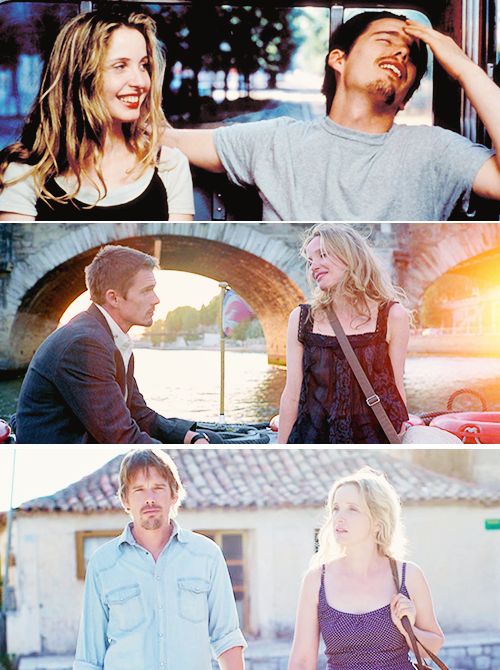
Even a fly on the wall in this sequence would have the decency to leave. Modern American movies aren't supposed to be this intimate. Not this personal. They're supposed to take us to the edge of the canyon, peek over, then return safety. "Before Midnight" wants none of that nonsense. Barring themselves both emotionally and physically (my friend Daniel Johnson points out that we barely notice Julie Delpy spends almost the entire scene topless because it's organically present), our two leads trade barbs with a ferocity, anger, and incisiveness that feels like life happening and life ending. Calling on all the history we know of the two leads, it's the culmination of the entire series up to this point. All the romance and idealism we thought was the standard comes apart at the seams, and it hurts like hell to watch. For so long, these characters felt like our's. Of course they later reconcile, albeit by simply accepting that fights such as these are part of their marriage now. But in this sequence, director Richard Linklater asks the brutal question, "This is what love leads to. Now is that really what you want?"

BEFORE MIDNIGHT Cuts To The Core Of You

BEFORE MIDNIGHT (directed by Richard Linklater, 2013)


"Think of it like this: jump ahead, ten, twenty years, okay, and you're married. Only your marriage doesn't have that same energy that it used to have, y'know. You start to blame your husband. You start to think about all those guys you've met in your life and what might have happened if you'd picked up with one of them, right? Well, I'm one of those guys. That's me, y'know, so think of this as time travel, from then, to now, to find out what you're missing out on."
--Jesse, "Before Sunrise" (1995)

"So tell me about this time machine."
--Celine, "Before Midnight" (2013)

There we have two scenes separated by almost two decades but bleed directly into each other. From "Before Sunrise" to "Before Sunset" and now "Before Midnight," here is film series that builds and builds relentlessly, each movie absorbing all that came before while following it to the next logical step. To see one without the others is to collapse the Jenga tower. Cinema with a memory. 

Time drags for us all. It doesn't march. It drags. And it drags slowly, damnedly, to leave us with moments enough to realize that. Little things like, "Are my teeth really this decayed?" and, "I guess this is what I'm doing with my hair now." But also bigger stuff, our possibilities delayed and our limitations lazily embraced. Life might get easier as you go, as you learn what you want and ignoring the rest. But it can also gets a whole lot more painful - the romantic ideals you once held close and the versions of yourself you assumed you'd become all steamrolling forward and slamming you into the present. 

Richard Linklater's "Before Midnight" is a beautiful movie for so many reasons. Beautiful for its lush photography of Greece that seems to come packaged in a frame. Beautiful for capturing those little moments in life between what we believe life is. But most of all it's beautiful for understanding that passage of time better than almost any movies I can remember.

Lets go back to the first movie in 1995. Two young lovers (Ethan Hawke and Julie Delpy) meet on a train bound for Vienna and discover a romantic connection so potent and out of their control, it's like they stumbled upon buried treasure. That movie chronicled where they dreamed of going. Next came part II in 2004 where they meet again for the first time, having never followed through on their plan to reunite. With characters in their early 30s, lines starting to trace their faces, that was the movie of where they went.

Now here we are again, but something's different. Not off, just different. Things are darker. More searing. Gone is the idealism that trademarked "Before Sunrise" and even the hopeful realism of "Before Sunset." Now we're left with two people in their 40s facing the unwavering realization of no where else to go. Where they once had "hopefully," now they're left with "actually."

This is the movie of where they're stuck. 

Jesse and Celine aren't kids anymore. Nor are they adults with the time to find a new path. They're married. They're parents with twin girls together. They made a life together in Europe. Now Jesse yearns to return to America and be closer with the son from his previous marriage. Celine, meanwhile, worries that she's not making enough of an impact in the non-profit sector and considers a new job with the government.

What's brilliant about the structure of "Before Midnight," though, is it doesn't dive headlong into those "Scenes From A Marriage" confrontations you read so much about. Anyone who knows Richard Linklater movies knows how much he loves putting intelligent people together and watching them be intelligent. As with the first two "Before" movies, these people have dictionaries and aren't afraid to use them. And the first half basks in the unadulterated joy of putting these two people together again, including a conversation in a car ride presented in two unbroken shots and lasting longer than ten minutes. Crucially we also get them separated for the most extended time period in the series, talking to two different groups of people, demonstrating their lives have grown and allow for others.
This is the fantasy half of the picture. The half we'd feel content to bathe in forever. The half where the two of them can still walk and talk, still amusingly bullshit each other, still share anecdotes the other person somehow hasn't heard, while inspiring thoughts in each other they didn't know they had. It's also essential to the power of the second half.

We too easily frame the first two movies as a classic love story, and that's fine - we're the audience. We can do what we want. But what's dangerous is Jesse and Celine believe the same thing. Jesse, the writer, has immortalized their multi-year courtship in his novels, and now they believe the bulletproof myth of their own fairy tale. They believe that happily ever after comes next because it's the third act and that's what happens.

Thus, when we enter the actual third act of "Before Midnight," it hits like a punch in the gut because Linklater strips away the veneer and reveals their marriage for what it is, in the early stages of decay. It relied so much on fantasy, it didn't make room for reality. Presented almost exclusively inside a hotel room, this last act harkens back to Eric Rohmer art house films of the 70s - intense, behind-closed-doors arguments where people cut loose and let what they desire fuel what they do and say. 

And the screenplay, cowritten by Linklater with Hawke and Delpy, doesn't hold back. When Jesse and Celine finally argue, they don't do it in the cute way sitcom couples fight, more akin to banter than anger. This is rough and messy, Peckinpah with words instead of bullets. They argue like people who have known each other for a long time, know the other person's sore spots, and know exactly what to say and when to say it to hurt the other person the most. 

Celine is emotional and insecure and feels reduced by the mother role she now plays. Jesse likes to believe he is pragmatic and reasonable and deep, while those descriptors are just self-applied. This isn't the marriage they signed up for. But this is the marriage they have. And like the sun they watch fade away in the distance, everything they once had planned with each other is gone. If "Before Midnight" has a happy ending (and it does), it's to Linklater's credit that nothing about it feels whitewashed. Never do these two people solve their problems. They just recognize they have them, that these problems aren't going away, and if their marriage will survive, they'll just have to accept that.

What a sad, but lovely and tender moment when it arrives.

"Before Midnight" (and really the whole series) is so many things, and the easiest label to slap is an exploration of love. Which it is. One of the best explorations of love in American movies, really. But at this point, it has evolved into something much higher. Jesse and Celine are no longer characters in an ongoing romance. They're cyphers. They're vessels in which we're encouraged to project our own desires and fears and regrets and hopes and wasted dreams. When they argue or moan for what once was, all we can do is look inward and empathize. When they're happy, it soars because we remember our best moments and realize we're still capable of them.

Ultimately what Linklater and Hawke and Delpy have done with this series (and what I hope they'll continue to do) is borderline noble, one of the noblest things art can do. They present characters who are singularly their own until we have no choice but to see ourselves, and maybe become slightly better people.

This is vital cinema.


Monday, June 24, 2013

MONSTERS UNIVERSITY Best Graded On A Pass/Fail Scale

MONSTERS UNIVERSITY (directed by Dan Scanlon, 2013)


Of all the movies for "Monsters University" to ape, who know among the most blatant would be a Vince Vaughn/Owen Wilson comedy released two weeks ago?

Not to say the comparisons to their movie "The Internship" approach a "Deep Impact"/"Armageddon" level. But lets break it down. Slobs vs. snobs conceit? Check. Movie-length competition determining the characters' fate? Check. Antagonistic supervisor secretly rooting for the heroes? Check. Two teammates bucking a system that casts them aside? Major check.

My point isn't that Pixar consciously ripped from the same well as the latest Frat Pack smarm-fest. And I'm certainly not suggesting this movie (which is actually quite charming) holds equal artistic value to Vaughn and Wilson begging you to like them. Instead I'm making the point so factual, you can etch it in granite, tattoo it over your heart: Pixar at its peak represents the best mass entertainment of the day. Their's is a self-imposed standard almost impossible to vault.

Watching "Up" or "WALL-E" or "Ratatouille" for the first time was to be absorbed in the moment. I wasn't aware of the movies' ancestors. They were movies that arrived fully-formed, risen from their own mist. As the closing credits rolled, they carried the thrilling weight of movies I couldn't bear to never see again.

Such a standard is impossible, unfair even, to expect every time. And now here we are at "Monsters University," an entry in Pixar's third franchise. Lets not get too cynical - this is an utterly pleasant movie, witty and confident, colorful and entertaining. I just felt like I had seen this before. I sat there disappointingly aware of the cloth from which this movie was cut.

If Pixar's best movies represented a bold leap forward, "Monsters University" is an agreeable circle around the block. This is family entertainment as babysitting. A reasonable alternative to sweating outside in the heat. 

There. The unpleasantness is out of the way, and now instead of talking about what the movie isn't, we can talk about what it is. As a prequel to 2001's "Monsters Inc.," maybe it isn't entirely necessary. But you know what, we also live in a world with a prequel to the "Texas Chainsaw Massacre" remake, so lets just deal with it. We meet Mike (Billy Crystal, thankfully not doing anachronistic jokes about old people trying to text) on his first day at Monsters University, dreaming of one day becoming a "scarer" at the factory from the first movie. Despite an ingrained knowledge of every scare textbook there is, he's still a silly looking green eyeball. 

Enter Sully (John Goodman), who comes from a long family line of scarers, but lacks the discipline to learn the basics. With these inadequacies threatening to get them kicked out of the scaring program, their only chance is to band together and win the Scaring Games, an epic competition designed to impress the Crotchety Old Dean  (a mainstay of any campus comedy). 

Peak Pixar felt like adult movies posing in family entertainment clothing, but this is a children's movie through and through. The colors are bright and inviting. The jokes are pitched with a fast and zany effort. While the usual bones are thrown to parents to make them laugh, too, they often hit with a pleasant, surprising force (witness one monster shrieking, "I can't go back to jail!" when security catches them breaking into a building). When the emotional payoff arrives, it does so without the usual heft that accompanies Pixar if only because the stakes feel lower. 

Family animation is by and large predictable. The trick is to temporarily fool you into thinking it isn't, and "Monsters University" isn't quite up to the task. Still, just because we can see Point C coming 'round the bend from Point B doesn't mean we can't appreciate the effort it takes to get there. Sure, the stakes feel low. But the movie deserves credit for dodging its easier message of, "You can be anything you set your mind to" for a more complicated, "Accept that you might not have what it takes," all delivered in a commendably understated manner.

Kids aren't clobbered over the head with the moral. Instead "Monsters University" comes off with an agreeable lack of self-congratulation. It knows what it wants to say, and it trusts its audience enough to absorb it through osmosis. Some movies confuse "dark" with "edgy," and "Monsters University" opts for a path that feels almost courageous today: pure, unfiltered decency.

Losing the Best Animated Feature Oscar to "Shrek" (a movie that spawned its own more embarrassing franchise), the original "Monsters Inc" doesn't get the credit it deserves. Its premise gave Pixar animators full freedom to push their imaginations and, from there, technical abilities (remember what a wow-factor something as simple as Sully's fur had back then?). More importantly, it arrived after Pixar produced only two original features and a sequel. It set them on the path of creative discovery that led to further classics.

This new one won't stand as a shining beacon leading the way. But it doesn't tarnish its own history either. If other Pixar works earned hallowed spots in my DVD collection, this one earns the right as pleasant background noise on inevitable Disney Channel airings.